25 Oct 2026
Decoding the Sequence of Policy Milestones in Emerging Digital Frameworks

Emerging digital frameworks have taken shape through a clear progression of policy decisions that build on one another across regions and sectors, and observers note how each step addresses gaps left by prior efforts while anticipating future technological shifts. Data protection rules established a baseline in the late 2010s, and subsequent layers added obligations for platforms, algorithms, and artificial intelligence systems that continue to expand in scope through the mid-2020s.
Foundational Steps in Data Governance
Early milestones centered on individual rights over personal information, with the European Union's General Data Protection Regulation taking effect in 2018 and prompting parallel updates in countries such as Brazil and Japan that adopted similar consent and accountability requirements. Researchers at academic institutions tracked how these rules influenced enforcement actions and corporate compliance programs worldwide, while government reports from Canada highlighted adjustments to federal privacy legislation that aligned with cross-border data flows. And yet the focus remained narrow until later measures incorporated platform accountability and systemic risk assessments that extended beyond individual consent mechanisms.
Platform Accountability Expands
By the early 2020s attention turned to online intermediaries, and the European Union's Digital Services Act and Digital Markets Act introduced obligations for very large platforms to conduct risk assessments and allow third-party audits. Data from regulatory filings show enforcement timelines stretching into 2024 and 2025, while parallel developments in Australia and Singapore emphasized transparency reporting on content moderation practices. Observers note that these measures addressed enforcement gaps identified in earlier data rules, and they set precedents for coordinated reviews across jurisdictions that share similar market structures.
Artificial Intelligence and Algorithmic Oversight
Attention then shifted to algorithmic decision-making, and the European Union's AI Act established risk categories for high-impact systems with phased implementation deadlines extending through 2026. Government agencies in the United States referenced similar principles in voluntary frameworks issued by the National Institute of Standards and Technology, whereas Canadian legislation proposed mandatory impact assessments for automated decision tools used in public services. Studies from research institutions indicate that these layered requirements build directly on prior platform rules by adding technical documentation and human oversight mandates that apply across sectors.
October 2026 marks a notable checkpoint when several overlapping compliance deadlines converge, including full application of certain AI Act provisions alongside updated reporting cycles under the Digital Services Act. Figures released by the European Commission reveal that designated platforms have already submitted initial risk assessments covering recommender systems and generative tools, and analysts expect further guidance documents to clarify technical standards during that period.
Global Coordination and Regional Divergence
International bodies have tracked how national approaches diverge even as they reference common principles, and the Organisation for Economic Co-operation and Development published updated guidelines on digital security and privacy that several member states incorporated into domestic policy reviews. Australian authorities released updates to their digital economy strategy that reference both European and North American models, while South Korean regulators advanced separate rules on data localization that interact with global cloud service requirements. Those who've examined the sequence observe that regional differences often reflect distinct enforcement capacities and market priorities rather than outright contradictions.
Looking Ahead to Implementation Patterns
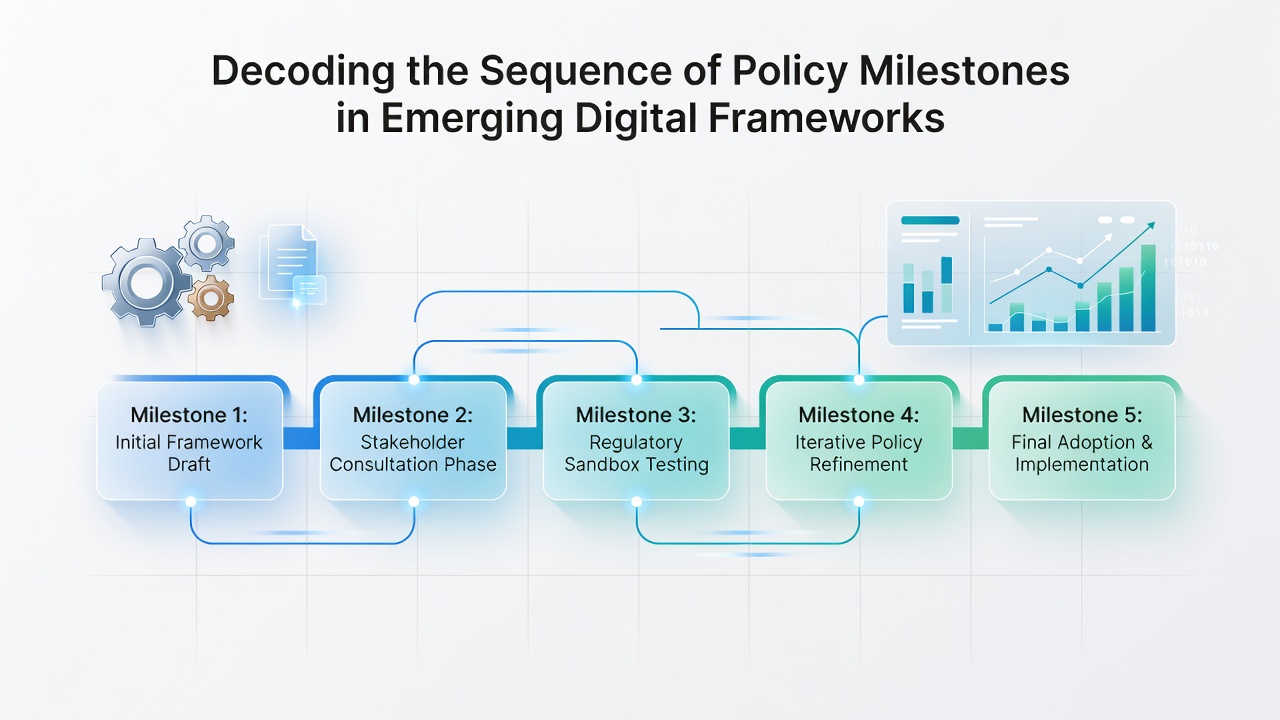
Implementation timelines reveal a pattern of iterative refinement, where initial broad principles receive detailed guidance through delegated acts and sector-specific codes of conduct. Industry associations in multiple regions have published compliance toolkits that map obligations across frameworks, and academic papers document how early adopters adjusted internal processes ahead of mandatory deadlines. What's significant is the cumulative effect: each milestone adds reporting layers, technical safeguards, and cross-border cooperation mechanisms that together form an increasingly interconnected regulatory environment.
Conclusion
The sequence of policy milestones in emerging digital frameworks demonstrates a deliberate progression from data protection foundations through platform accountability and algorithmic oversight, with October 2026 serving as a convergence point for multiple enforcement tracks. Government records, regulatory filings, and research summaries continue to document how these measures interact across jurisdictions, providing a factual record of how digital governance structures have evolved and continue to develop.